
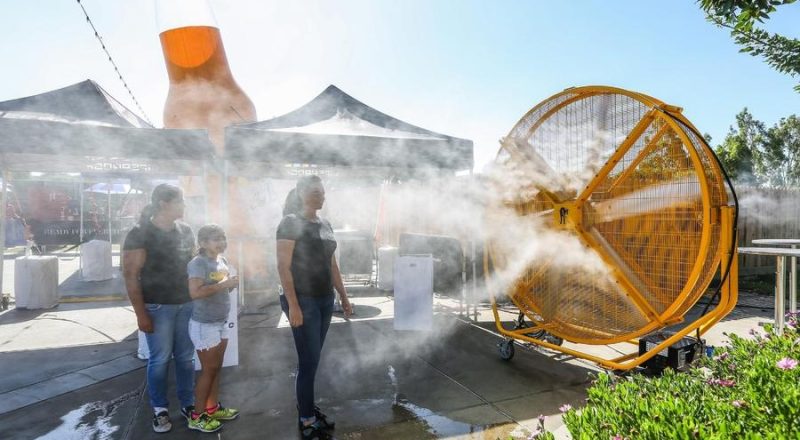

Air conditioning in extreme heat has long ceased to be a matter of convenience; it is already a basic part of everyday life. When the ambient temperature reaches 45°C or higher, the cooling system becomes the main source of energy consumption, effectively functioning as the best heating and cooling system for maintaining indoor comfort in such harsh conditions. In reality, an air conditioner is capable of generating up to 60-70% of the total electricity load in a residential building, and it simply becomes unwise to ignore this fact.
Energy Consumption And Cost Structure
Any calculation starts with a simple formula, but it hides a lot of nuances. The power of the air conditioner, expressed in watts, directly affects the total consumption of kWh, and therefore the cost. For example, a standard 1.5 ton split system consumes about 1200-1800 watts per hour. When working 12-16 hours a day, this turns into a significant 450-960 kWh per month.
But it doesn’t end there. Central air conditioning, especially in large houses, increases the load significantly up to 3000-5000 watts and above. As a result, monthly expenses easily reach the range of 200-800 for apartments and 500-1500+ for spacious houses. Add to this the electricity tariffs about 23-38 fils per kWh and we get a system where every extra degree or hour of operation has a price.
Influence Of Climate And Operational Factors
Climatic conditions form the main burden, and it is impossible to ignore it. During the hot months, the air conditioner works almost continuously, sometimes up to 18-24 hours a day. This increases costs by 400-600% compared to the winter period, when consumption practically disappears.
However, it’s not just the temperature that affects the system. The thermal insulation of the building, the quality of the windows, and even the orientation of the rooms play a significant role. Poor insulation increases heat flow by 25-40%, and solar radiation through windows adds another 40-60%. In addition, air leaks through cracks and doors can “eat up” 20-30% of the cooled air, turning it into direct financial losses.
The mode of use is equally important. The temperature of the thermostat is a key cost management lever. An increase of just 1°C reduces consumption by 5-8%, which provides significant savings on a monthly basis. The optimal range is about 24-25°C, where a balance is maintained between comfort and cost.
Technology, Maintenance And Optimization
The difference between the types of air conditioners becomes especially noticeable during long-term operation. By adjusting the compressor power, inverter systems reduce energy consumption by 30-50%. These are not just numbers, these are real money that remains with the owner.
The service life is also different. Inverter models operate for 12-15 years, whereas conventional systems are often limited to 8-10 years. Moreover, older devices lose efficiency and start consuming 40-70% more energy. In such cases, modernization becomes not an expense, but an investment with a payback period of about 2-3 years.
Special attention should be paid to maintenance. Contaminated filters increase energy consumption by 15-25%, and contamination of the heat exchanger reduces cooling efficiency. Regular cleaning and prevention are relatively inexpensive about 200-500 per visit or 300-1500 per year but they have a noticeable effect in reducing operating costs.
And finally, it’s worth remembering about additional payments. In addition to basic consumption, the bill includes fuel surcharges (3-7 fils per kWh), fixed infrastructure fees, municipal payments and a 5% tax. These elements make the total amount higher than it seems at first glance.
As a result, air conditioning is not just a technique, but a whole system where energy consumption, climate, technology and user behavior intersect. And the better you understand this system, the easier it is to control costs without sacrificing comfort.